 Blog
Best Center Console for Bahamas Island Hopping: Top Picks
Center console boats for Bahamas island hopping: compare range, fuel capacity, and offshore features to choose the right vessel for Gulf Stream crossings.


Last Updated: November 5, 2026
Quick Summary
Evaluate yacht brokerage marketing by asking for the written marketing plan before you sign, then auditing it in four passes: deliverables, timeline, accountability, and exit. Score each broker against a fixed checklist and judge performance on qualified inquiries, showings, offers, and days on market, not impressions.
A real plan covers target buyer profile, pricing rationale, listing placement, visual assets, outreach schedule, and reporting cadence.
Ask which channel produced each inquiry; a sample inquiry log should show date, buyer, channel, yacht, and outcome.
A yacht with inquiries but no showings may have a pricing or availability problem.
Score brokers 1 to 5 on eight criteria, including written plan, itemized fee, and reporting cadence.
Verify hull identification number, LOA, beam, draft, engine hours, and equipment list before approving the listing.
Start With the Yacht Broker Marketing Plan, Not the Pitch Deck
Questions to Ask a Yacht Broker About Their Marketing Strategy
Judge Yacht Marketing Photography and Video on Technical Merit
Yacht Broker Marketing Performance Metrics That Actually Matter
Build a Repeatable Scorecard for Comparing Brokerage Marketing
A written yacht brokerage marketing plan is the single document that separates a real listing strategy from a sales conversation. Ask for it before you sign.
The pitch deck is theater. The plan is the work.
A real plan covers six things. If any one is missing, press on it.
Target buyer profile. Who the yacht is priced and positioned for, by region and use.
Pricing rationale. Comparable sales, current inventory, and how the ask was set.
Listing placement. Which platforms, in what order, and why.
Visual assets. Photography and video specs, plus who shoots them.
Outreach schedule. Print, digital, and direct-to-buyer contact.
Reporting cadence. How often you get numbers, and which numbers.
Vague language like "extensive exposure" is not a plan. Ask what "extensive" means in channels and dates.
Commission structures vary, and a broker should explain the fee in plain terms tied to deliverables. Ask what the commission covers and what gets billed separately. Get it in writing.
Ask what the fee pays for, and ask for that answer in writing.
For a deeper look at how fiduciary duty and fee disclosure work, our guide to yacht brokerage transparency standards walks through what sellers should expect.
The fastest way to evaluate yacht brokerage marketing is to ask questions a weak plan cannot answer. Good brokers welcome them. Weak ones get defensive.
Bring a written list. Take notes. Compare answers side by side.
Can I see a sample marketing plan from a past listing?
Which channels will my yacht appear on, and in what order?
Who writes the listing copy, and who approves it?
What is your photography and video process?
How will you report inquiries and showings to me?
What happens if the yacht does not sell in the first 90 days?
How do you handle buyer targeting outside this region?
What is your fee, and what does it cover?
Pay attention to question three. Listing accuracy matters, and a broker who cannot explain who verifies the details is a risk.
Most marketing advice tells brokers what to do. Fewer guides tell a seller how to audit the plan in front of them. That is the gap worth closing before you sign.
Work through the plan in four passes, in this order:
Deliverables pass. Every promised item should have a name, an owner, and a date. "Professional photography" is not a deliverable; "exterior and interior shoot by a named marine photographer, delivered within ten days of listing" is.
Timeline pass. The plan should show what happens in week one, week four, and the first 90 days. A plan with no dates is a wish list.
Accountability pass. The plan should name who reports to you, how often, and in what format. If the reporting line is vague, the follow-through will be too.
Exit pass. The plan should state what changes if the yacht has not drawn a qualified inquiry or a showing in the first 60 to 90 days. A broker with a real plan has an answer ready; one without a plan changes nothing and waits.
A plan that survives all four passes is one you can hold to account. A plan that fails any pass is a conversation, not a strategy.
Marketing that works in one market does not automatically work here.
Ask three local questions. Which local boating networks and events will the yacht be shown through? How does the plan account for seasonal demand? And how will this yacht be positioned against comparable listings in the region?
If you are weighing an independent firm against a larger house, our breakdown of independent yacht broker benefits explains what true representation changes. For a direct comparison of structures, see independent vs corporate yacht broker.
Good yacht photography is not pretty. It is accurate. Judge it on what it shows a buyer before they ever step aboard.
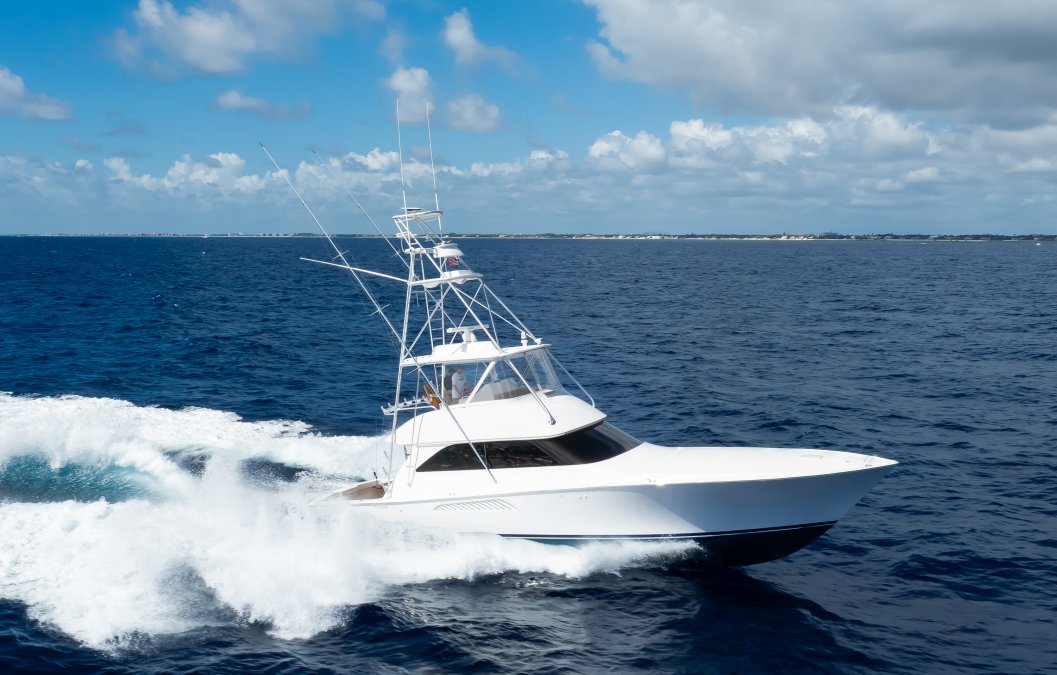
Look for these technical markers in every set:
Full exterior spread. Bow to transom, both sides, and an overhead.
Engine room and lazarette. Clean, lit, and honestly shot.
Running surfaces and underwater gear. Props, shafts, and hull condition.
Cockpit and helm detail. Electronics legible, upholstery visible.
Video walkthrough with narration. Not a silent slideshow set to music.
A common mistake is accepting a gallery of dock shots with no engine room. Buyers ask for it, and its absence reads as a problem.
The metrics that matter are the ones tied to a sale: qualified inquiries, showings, offers, and days on market. Vanity numbers like impressions and likes do not pay a slip fee.
Ask your broker to report these weekly or biweekly:
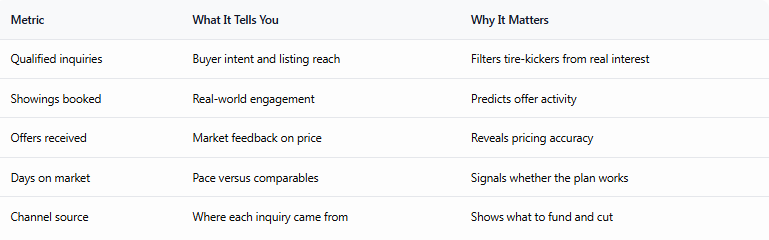
Attribution is the question most plans dodge. Ask which channel produced each inquiry. If a broker cannot tell you whether a lead came from a listing platform, an email campaign, or a direct call, the plan is running blind.
The mechanism is simpler than most sellers expect.
Ask to see a sample inquiry log. It should show, line by line, the date, the buyer's name, the channel, the yacht, and the outcome. A broker who can produce that log is running a measurable plan. One who cannot is guessing with your yacht.
A raw count means little without context. The useful comparison is your yacht against similar vessels in the same size and price band, in the same region, over the same window.
In general, a yacht that draws listing views but few qualified inquiries may have a presentation problem, such as photography or copy. A yacht with inquiries but no showings may have a pricing or availability problem.
Watch out: a broker who reports only total views and total inquiries, with no channel and no comparable set, is giving you activity, not accountability.
Two more numbers belong in every report. Time to first showing measures how quickly interest turns into a buyer standing on the deck. Sale-to-asking ratio tells you how realistic the pricing conversation is. Ask for both across the firm's recent sales in your size range, not just your own listing.
These are the numbers you can hold a broker to. Put them in the written plan with a reporting date, and review them on that date.
A scorecard turns a gut feeling into a fair comparison. Score each broker on the same criteria, then add it up.
Use a simple 1-to-5 scale per line:
Written plan provided before signing
Fee and deliverables itemized in writing
Photography and video specs defined
Channel list with named platforms
Reporting cadence and metrics stated
Buyer targeting beyond the local market
Listing accuracy and review process
Response time to your questions
Add the scores. A broker who scores well on paper and in person is the one to trust. One who scores low on the written plan will likely score low on delivery.
When you are ready to apply the scorecard to real firms, our guide to luxury yacht brokerage services in Florida gives you a starting list to compare.
The listing is the product. Read it like a buyer would, line by line, before you approve it.
Check these details:
Hull identification number. Correct and verified.
LOA, beam, and draft. Accurate to the spec sheet.
Engine hours and service records. Current and documented.
Equipment list. Complete, with model numbers where relevant.
Provenance. Ownership history and any liens disclosed.
Provenance deserves its own pass. Our article on why yacht ownership history verification matters explains how title abstracts and service records protect a purchase.
Watch out: a listing that hides a known issue will surface it at survey. That costs you time and negotiating use.
A plan reads differently when you stand on the dock with the broker who wrote it. Meet in person. Walk the vessel. Ask them to point at the features the plan says they will photograph.
Ask for an in-person walkthrough and see whether the broker knows the vessel's systems, not just its price.
Three things to watch in person:
Do they know the engine room layout without checking notes?
Can they explain the buyer profile for this specific yacht?
Do they answer fee questions directly, or deflect?
A broker with real vessel experience answers differently than one reading from a sheet.
The takeaway is simple. Ask for the written plan, score it against a fixed list, and verify the listing before you sign.
A usable plan names the target buyer for your vessel type, the channels the brokerage will use, and how each channel gets measured. Ask for the listing schedule, the photography and video scope, the email cadence to the brokerage's buyer list, and the paid advertising budget with audience segmentation. It should also state who handles inquiries, how showings are logged, and what report you receive each month. If any of those items are missing or described only in general terms, the plan is a sales pitch rather than an operating document.
Look for channel-level data, not a single traffic number. Useful yacht broker marketing performance metrics include listing views by source, saves and shares, qualified inquiries per channel, showings booked, and offers generated. Ask how the brokerage separates a casual click from a buyer with proof of funds. Conversion rate from inquiry to showing tells you more than raw website traffic.
Strong yacht marketing photography and video covers the whole vessel, not just the profile shot: hull and running surface, engine room, lazarette, electronics at the helm, and the staterooms. Ask whether the shoot is done by a marine specialist, whether drone work is included, and whether the video walks the vessel in a logical order. Resolution, lighting, and decluttering before the shoot all affect listing visibility. Poor imagery suppresses click-through on every channel, so review the last three listings the brokerage published before you commit.
Set a review point in the listing agreement rather than waiting for a vague feeling that nothing is happening. Ask the brokerage what inquiry and showing volume they expect in the first 30 and 60 days for a vessel like yours, then hold a scheduled review against those numbers. At that meeting, examine inquiries by channel, showing feedback, and whether the price aligns with current search demand. If the data shows reach without qualified leads, the problem is targeting or presentation; if it shows no reach, the problem is visibility.
 Blog
Center console boats for Bahamas island hopping: compare range, fuel capacity, and offshore features to choose the right vessel for Gulf Stream crossings.
 Blog
Marine technical vetting for private yachts goes beyond a survey. See what a vetting inspection covers and how it differs from a marine survey.
 Blog
Viking vs Hatteras sportfish comparison for 2026: offshore performance, resale value, and what to inspect before you buy a used yacht.
Send them over. Every inquiry gets a substantive response within 24 hours, from a person who has read what was asked.