 Blog
BlogHow to Evaluate Sportfish Engine Hours
Learn how to evaluate sportfish engine hours accurately. Understand duty cycles, maintenance history, and diagnostic tools to assess true engine condition.


Spencer Christopher Yacht and Ship: Fiduciary Care From First Showing to Delivery
Fraser Yachts: Deep Superyacht Bench for Complex Acquisitions
Worth Avenue Yachts: Boutique Attention With High-Touch Listing Presentation
Moran Yacht & Ship, JFA Yacht, and High Seas Yachting: Three Regional Alternatives
Yacht Broker Fiduciary Responsibilities and How to Test Them
Which Luxury Yacht Brokerage Services in Florida Fit Your Situation
Last Updated: September 21, 2026

Choosing among luxury yacht brokerage services in Florida comes down to three things: verifiable credentials, the brokerage model that fits your transaction, and who legally represents you when the deal turns. This guide from Spencer Christopher Yacht and Ship breaks down five brokerage models, the purchase agreement clauses that decide real money, and the fiduciary questions most buyers never think to ask until it is too late.
Florida remains the deepest yacht market on the Eastern Seaboard. The volume of pre-owned yachts, new construction slots, and dockage along the coast means buyers have more choice here than anywhere else, and more ways to get quietly misrepresented.
Below is how to separate a real broker from an order-taker, and which model fits your situation.
A licensed Florida yacht and ship broker is bonded and state-registered. That is the floor, not the ceiling. Ask three questions before you sign anything:
Is the broker a Certified Professional Yacht Broker (CPYB)?
Are they a member of the International Yacht Brokers Association (IYBA)?
Does anyone on the team hold a USCG Master license or come from a captain, crew, or engineering background?
The last one matters more than buyers expect. A broker who has stood a watch or turned a wrench reads a survey differently than one who has only read listings.
.png)

Spencer Christopher Yacht and Ship provides representation for buyers and sellers who want guidance from people who have actually run vessels. The team is built from USCG captains, former yacht crew, engineers, and mechanics with more than four decades of cumulative experience, and the firm is independently owned, which means no corporate parent's inventory targets sit between you and honest advice.
Key Takeaway The real difference between brokerages shows up during the survey and the closing, not the showing. Ask who handles escrow and who reads the survey findings before you commit.
Fraser Yachts operates at the top of the superyacht segment, with brokerage, management, and new-build consultancy under one roof. If you are acquiring a large vessel with complex flagging, crew, and classification requirements, the depth of their bench is genuine.
Worth Avenue Yachts built its reputation on presentation and personalized service, with strategic locations including Manalapan. Sellers who want their vessel photographed, marketed, and shown with real care tend to get that here.
Three more names worth understanding, each with a different center of gravity.
A yacht purchase agreement is the binding contract that sets price, contingencies, closing terms, and who bears risk when the survey finds problems. Most disputes trace back to clauses that were vague or missing, not to bad faith. What separates a strong agreement from a weak one is how precisely it handles the Florida-specific mechanics of titling, documentation, and tax exposure.
Read these sections first:
Survey contingency language. States the window for survey, sea trial, and haul-out, and your remedies if findings are unacceptable.
Deposit and escrow terms. Names the escrow holder and the conditions for release.
Acceptance and rejection thresholds. Defines what counts as a material defect versus normal wear.
Closing date and location. Sets the deadline and where title transfers.
Default and remedy provisions. Explains what happens if either party walks.
Documentation and titling clause. States whether the vessel is U.S. Coast Guard documented or state-titled, and who handles the transfer.
This is where a Florida transaction diverges from a generic contract template, and where most buyers learn the hard way.
Watch Out Do not sign an agreement that is silent on documentation versus titling, or that leaves the lien search to closing day. Both are avoidable sources of delay and dispute.
The survey contingency is where money changes hands without anyone raising their voice. A well-drafted clause gives you a defined window to inspect, a defined remedy if defects surface, and a defined point at which your deposit becomes non-refundable.
Watch Out Never sign an agreement where the deposit becomes non-refundable before the sea trial and haul-out are complete. If mechanical issues surface afterward, you have no use and no exit.
Before you sign, confirm the agreement addresses each of the following in writing:
Survey, sea trial, and haul-out windows, with specific day counts
Escrow holder named, with release conditions stated
Material defect defined, with a dollar threshold for required repairs
Documentation versus titling path stated, with the responsible party named
Lien and encumbrance search ordered, with a remedy if one surfaces
Sales tax and registration obligations flagged for your tax advisor
Closing date, location, and delivery condition (where, as-is, with what equipment aboard)
Default and remedy provisions for both parties
Yacht broker fiduciary responsibilities mean the broker must put your interests ahead of their own commission and disclose material facts that affect your decision. A broker who represents both buyer and seller in the same transaction has a conflict, and it must be disclosed in writing.
Test it with direct questions before you engage:
Who does this broker legally represent in this transaction?
Is dual agency disclosed in writing, and do I consent to it?
How is the commission structured, and who pays it?
Will the broker disclose every known defect, including ones that reduce the sale price?
Dual agency is legal when disclosed and consented to. It becomes a problem when it is quiet. Ask for the disclosure in writing, and ask which party the broker would advise if the two sides disagreed on price or repairs.
Match the model to the transaction. A captain-led independent brokerage fits buyers who want technical depth and a fiduciary posture on a sportfish, center console, or superyacht. A global house fits the largest acquisitions. A boutique firm fits sellers who prize presentation. A regional specialist fits single-market buyers who value local knowledge.
Focus on the deposit terms, the survey and sea trial contingency window, and who pays for haul-out and repairs if defects surface. Confirm the vessel description matches hull identification numbers, engine hours, and included equipment. Check the closing date, escrow instructions, and whether the agreement names a specific dispute resolution venue. A purchase agreement that lets the seller keep the deposit after a failed survey is a red flag. Have a maritime attorney review it, and ask your broker to walk you through every contingency clause line by line before you sign.
Start with the broker's individual license through the Florida Department of Business and Professional Regulation, which maintains a public licensee search. Confirm membership in the International Yacht Brokers Association or YBBA, since both require ethical standards and continuing education. Ask whether the lead broker holds a Certified Professional Yacht Broker designation or a USCG Master license. Then ask for references from recent buyers and sellers in your vessel class. A firm that hesitates to provide any of these is telling you something.
Fiduciary care means the broker puts your interest ahead of the commission. In practice that looks like disclosing known defects, recommending an independent marine survey rather than one the seller prefers, and telling you when a vessel is overpriced or a bad fit even if it kills the deal. It also means written disclosure of dual agency if the broker represents both sides, full accounting of escrow funds, and honest advice on whether to walk away. Ask any broker directly how they handle a conflict between your interest and their fee.
The strongest firms in the state combine large-vessel transaction experience with local dockage and survey knowledge. Spencer Christopher Yacht and Ship pairs USCG captains and former crew with an in-house closing department for sportfish and superyacht clients along the Eastern Seaboard.
The survey is your leverage point. A qualified marine surveyor inspects the hull, machinery, electrical systems, and safety equipment, then issues a report that either confirms value or surfaces defects. If the survey finds issues, you can renegotiate the price, require the seller to repair, or walk away and recover your deposit under the contingency clause. Never skip the sea trial that follows, since some mechanical problems only appear under load. Budget for a separate engine oil analysis and rigging inspection on sailing vessels.
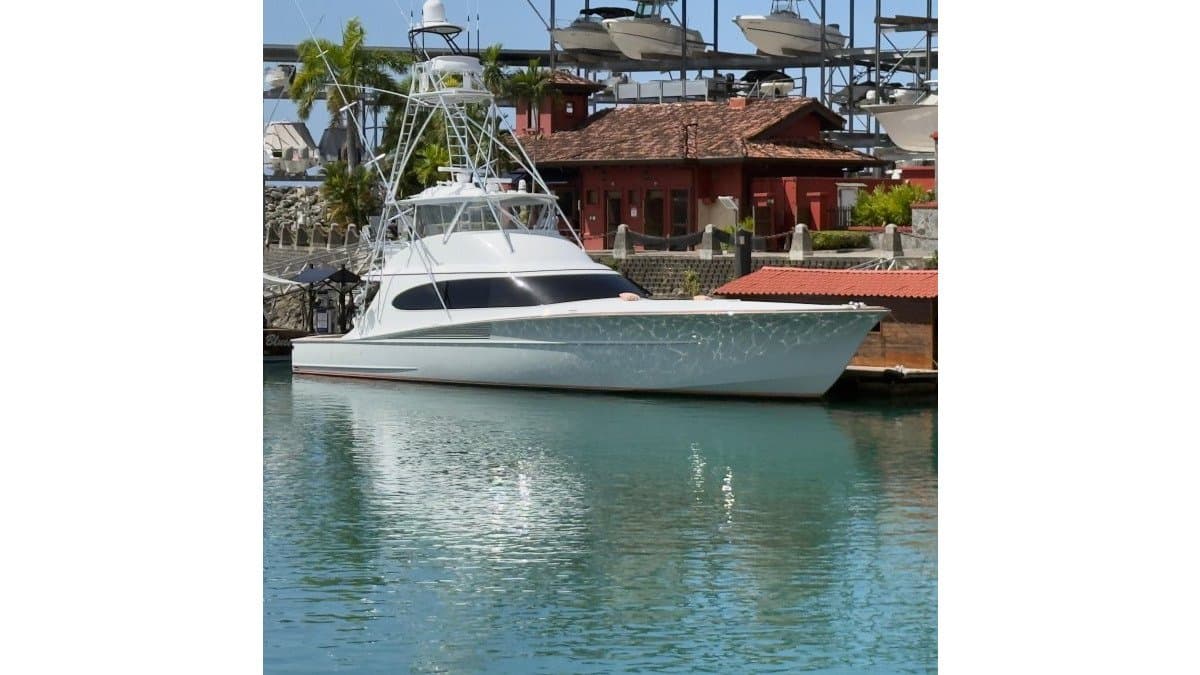
BlogLearn how to evaluate sportfish engine hours accurately. Understand duty cycles, maintenance history, and diagnostic tools to assess true engine condition.
 Blog
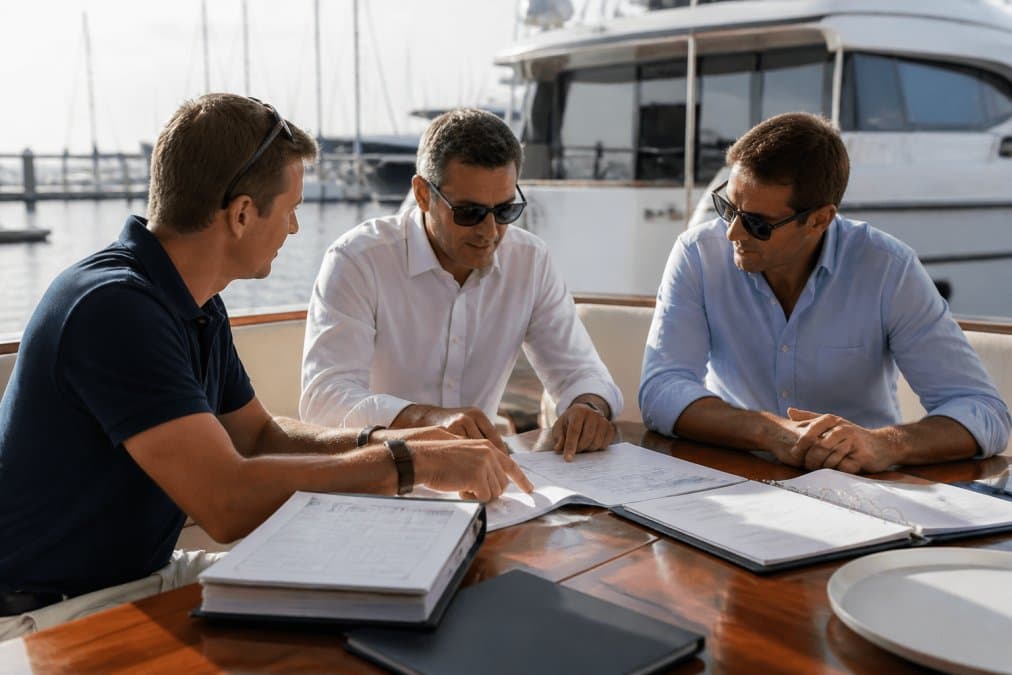
BlogFollow the steps to buying a luxury yacht in 2026, from title search to survey, closing and delivery. Learn how a fiduciary broker protects your purchase.
 Blog
BlogPost purchase yacht transition support explained: registration, handover, maintenance, and crew. Get expert guidance and discover what to do next.
Send them over. Every inquiry gets a substantive response within 24 hours, from a person who has read what was asked.