 Blog
How to Avoid Hidden Mechanical Costs on a Used Sportfish Yacht
Avoid hidden mechanical costs when buying a used sportfish yacht. Use this survey, engine survey, and sea trial checklist to protect your investment.


Boutique Yacht Brokerage vs National Firms: Service Level Comparison
Yacht Broker Buyer Representation: Who Actually Works for You
Yacht Broker Seller Representation: Marketing Reach vs Personal Advocacy
The Yacht Purchase Survey and Sea Trial Process: Where Experience Shows
Last Updated: October 22, 2026
A boutique yacht brokerage is a small, independently owned firm where a named broker handles your transaction personally from first showing to closing. That structure produces a very different service level than a national firm with dozens of offices and a large listings network. This comparison comes from Spencer Christopher Yacht and Ship, an independent brokerage based in Stuart, FL, serving buyers and sellers across the Eastern Seaboard and the Bahamas.
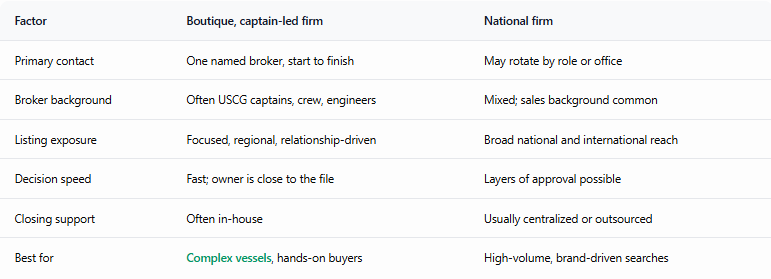
Here is the short answer. National firms win on listing exposure and brand recognition. Boutique firms win on who actually answers your call, how deep the inspection goes, and whether the person advising you has run a vessel of this size. The gap shows up most clearly in three places: representation, survey, and sea trial.
International Yacht Brokers Association sets professional standards many brokers on both sides of this comparison follow, which makes the structural differences easier to isolate.
The real difference is not size. It is who holds the file. In a captain-led firm, the broker advising you has stood a watch, run a galley, or turned a wrench in an engine room. That background changes which questions get asked before an offer is written.
Corporate brokerages run on volume and process. A central listing agent takes the vessel, a showing agent may walk you through it, and a transaction coordinator handles paperwork. Nothing is wrong with that model. It is efficient at scale, and it works well for standardized transactions.
Where it thins out is the middle. The person who listed the yacht is rarely the person standing in the engine room with you at survey.
Pro Tip Ask any broker one question before listing or buying: "Who will physically attend the survey and sea trial?" If the answer is not the person sitting across from you, you have found the service gap before you have signed anything.
Yacht broker buyer representation is the duty a broker owes the purchasing party: identifying suitable vessels, disclosing known defects, and negotiating on the buyer's behalf. In practice, that duty gets tested the moment a survey turns up a problem.
This is where buyers get surprised. On a listed vessel, the broker is often working for the seller under a listing agreement. A buyer's broker, by contrast, owes loyalty to you. Ask directly which side of the table your broker sits on, and get it in writing.
At a boutique, captain-led firm, buyer representation tends to be hands-on. The broker reads the survey with you, flags items that affect value, and pushes back on a seller's position when the evidence supports it. At a large firm, buyer agents are capable, but their time is split across more files.
Confirm in writing who the broker represents
Ask whether dual agency is possible on the vessel
Request the broker's license and CPYB status
Ask how many vessels they personally closed in the past year
Watch Out Skipping the representation question is the most common buyer mistake. If you assume your broker works for you and they are actually the listing agent, you lose the advocacy you thought you were paying for.
Yacht broker seller representation covers pricing strategy, listing presentation, marketing, showing management, and negotiation through closing. National firms bring reach; boutique firms bring attention per listing.
A large firm can place your vessel in front of a bigger pool of buyers through its own network and multiple listing services. For a common model in a common price band, that exposure matters.
For anything unusual, a refit-heavy sportfish, a custom center console, or a vessel with a specific history, reach without context is noise. A boutique broker knows the vessel, knows the buyer pool for it, and can speak to its provenance in a showing. That personal advocacy often produces better-qualified showings rather than more of them.
Sellers should weigh both honestly:
National firm pros: wide exposure, strong brand recognition, large buyer database
National firm cons: less time per listing, contact may change mid-transaction
Boutique pros: direct access to the decision-maker, tailored marketing, faster feedback
Boutique cons: smaller raw audience, regional focus
Boat Owners Association of The United States publishes consumer guidance on brokerage agreements that is worth reading before signing a listing.
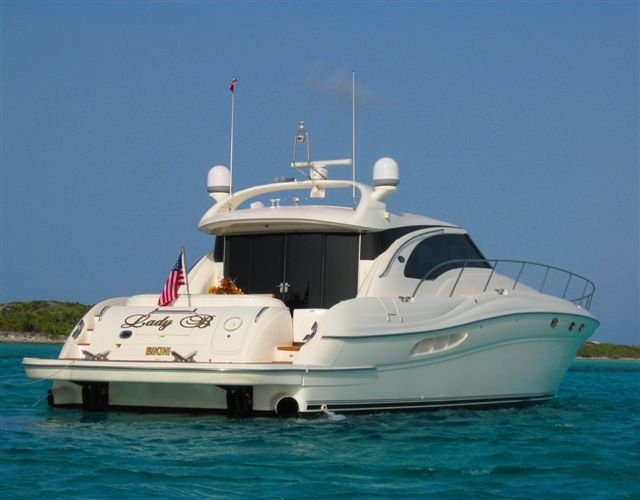
The yacht purchase survey and sea trial process is the inspection phase where a marine surveyor examines hull, systems, and structure, followed by a sea trial that tests engines, running gear, and handling under load. This is where captain-led experience earns its keep.
A broker who has run vessels catches things a sales-only broker walks past. Those observations do not replace the surveyor. They tell you which survey findings deserve a second look and which are cosmetic.
The survey is not a formality. It is the last real chance to reprice the deal or walk away with your deposit intact.
Practical sequence we recommend:
Review the vessel's maintenance records before the survey
Hire an independent surveyor, not one recommended by the seller
Attend the haul-out and the sea trial in person if possible
Get a separate engine survey on any vessel with substantial hours
Negotiate from the survey findings in writing
American Boat and Yacht Council maintains the technical standards surveyors reference for systems and electrical work.
Key Takeaway The cheapest survey is the one that finds the problem before closing. A thorough inspection costs a fraction of a single major repair, and it gives you use to renegotiate.
Direct answers to these questions to ask a yacht broker will separate a real advisor from an order-taker. Ask them in the first conversation, not after you have committed.
Who do you represent in this transaction, and will you confirm it in writing?
Will you personally attend the survey and sea trial?
What is your license number, and are you a CPYB or IYBA member?
How do you handle a dispute after closing?
Who manages escrow, and is it a third-party escrow agent?
What is your process if the survey reveals a major defect?
Can I keep my own maritime attorney, or is that a problem?
That last question matters. A confident brokerage does not need to control your legal representation. An in-house closing department should speed the paperwork, not lock out your counsel.
For buyers and sellers in Stuart and the surrounding Martin County area, a local brokerage also means someone who can be at the dock. That proximity is hard to replicate from a national call center.
The right choice depends on the transaction, not on which model sounds better. A high-volume, mainstream vessel often benefits from a national firm's reach. A complex, refit-heavy, or high-value yacht benefits from a captain-led boutique where one broker owns the file and knows the vessel.
Ask who works for you, who attends the survey, and who answers after closing. The answers tell you more than any brochure. For buyers and sellers who want the highest standards on both sides, fully represented, that personal accountability is the whole point.
A boutique yacht brokerage is independently owned and typically staffed by a small team of licensed captains and former crew who handle a limited number of clients at once. National firms operate large networks with broad listing exposure and in-house departments. The practical difference is service level: boutique firms offer direct access to the broker handling your file, while national firms route work through teams and support staff. Neither model is universally better; the right choice depends on whether you value personal advocacy or maximum listing reach.
Sea-going experience is not a legal requirement, but it changes what a broker catches during a showing, survey, and sea trial. A broker with a USCG Master license and time as crew can read engine room condition, hull soundness, and handling characteristics. Ask any broker directly how many years they spent on the water and in what capacity. That answer tells you more about service level than the firm's logo.
Buyer representation means the broker owes you advocacy, not just access to listings. That includes identifying vessels that fit your use case, attending showings, advising on a fair offer, coordinating the survey and sea trial, reviewing the contract with your maritime attorney, and managing escrow through closing. Ask a prospective broker whether they will tell you when a vessel is a bad deal. A broker who cannot say no to a sale is not representing you.
Look for a licensed and bonded Florida yacht and ship broker, a CPYB or IYBA credential, and verifiable time on the water. Ask how many active listings the broker personally manages, who answers the phone after closing, and whether they have an in-house closing department or rely on outside vendors. Local knowledge of Martin County marinas, yards, and surveyors matters too. Request references from recent buyers and sellers, and call them.
BlogAvoid hidden mechanical costs when buying a used sportfish yacht. Use this survey, engine survey, and sea trial checklist to protect your investment.
 Blog
Learn how to finance a used sportfish yacht. Explore loan options, preapproval steps, documents needed, and what lenders evaluate.
 Blog
Yacht registration vs documentation explained: how USCG documentation and state registration differ, who qualifies, and what buyers must verify before
Send them over. Every inquiry gets a substantive response within 24 hours, from a person who has read what was asked.