 Blog
Boutique vs National Yacht Brokerage Service Levels
Compare boutique yacht brokerage service to national firms. See how captain-led representation, buyer and seller advocacy, and survey support differ.


The Used Sportfish Yacht Survey: Scope, Timing, and What It Covers
Marine Engine Survey: Why a Separate Engine Specialist Pays for Itself
Conclusion: Due Diligence Is the Cheapest Repair You Will Ever Buy
Last Updated: October 22, 2026
The engine survey, sea trial, and marine survey checklist are where a used sportfish yacht deal is won or lost. Skip any one of them and the hidden costs surface later, usually at the worst possible time. At Spencer Christopher Yacht and Ship, our brokers are USCG captains, former crew, and engineers, and we have watched too many buyers learn this the hard way.
Here is the core problem. A sportfish yacht runs hard. Big diesels, generators, chillers, and pumps work under load for long days offshore. Sellers list what looks good. Buyers see shiny gelcoat and a clean salon.
The machinery below deck tells a different story.
Below, we break down the survey, engine inspection, records review, and sea trial that keep you out of that trap. The goal is simple: know what you are buying before the escrow closes, not after.
A used sportfish yacht survey is a full condition inspection of hull, systems, and machinery by a qualified marine surveyor. It should happen after you agree on price and before closing, with the vessel hauled out of the water.
Timing matters. Schedule the haul-out and survey early in the escrow period. That leaves room for a second look if something turns up.
The survey splits into two main parts.
The haul-out reveals what no dock walk can show.
Bottom and gelcoat: blisters, old repairs, and paint condition
Running gear: shafts, props, struts, rudders, and cutlass bearings
Through-hulls and seacocks: operation and corrosion
Transom and stringers: moisture readings and delamination
Deck and hardtop: soft spots around fittings and fasteners
Tower and outriggers: corrosion at the base and stress cracks
Moisture meters and tap testing are standard. Ask the surveyor to note every reading, not just the bad ones.
Systems get their own pass. This is where many budgets leak.
Generator load test and hour reading
Air conditioning and chiller operation
Freshwater and waste systems
Electrical panel, bonding, and battery condition
Fuel tanks, lines, and shutoff valves
Steering, trim tabs, and helm controls
Bilge pumps and high-water alarms
Watch Out A clean-looking engine room means nothing without a load test. A generator that starts cold and idles fine can fail under a full electrical load. Insist on running every system under demand, not just at the dock.
A marine engine survey is a dedicated inspection of propulsion and generator machinery by an engine specialist, separate from the general marine survey. It is the single most valuable check on a used sportfish yacht.
General surveyors know hulls and systems. Engine specialists know diesels. They read fault codes, check compression, inspect coolers, and pull oil samples. They also know the failure points specific to each engine model.
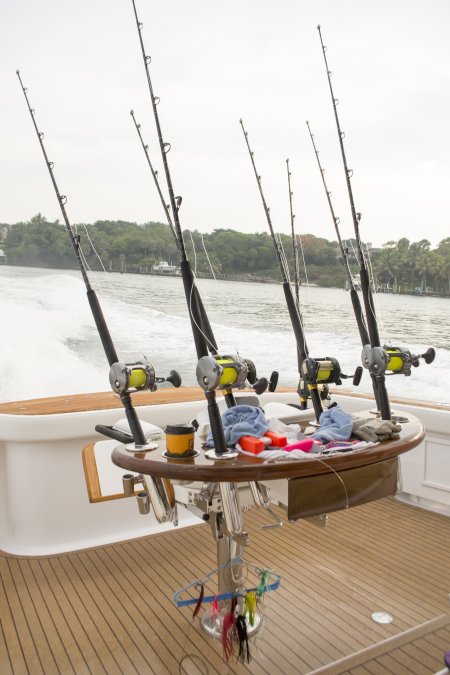
Common failure points an engine specialist checks:
Aftercoolers and heat exchangers: corrosion and clogging
Exhaust risers and elbows: internal rust and leaks
Turbochargers: shaft play and oil seepage
Raw water pumps: impeller condition and housing wear
Mounts and alignment: vibration and sagging
Oil analysis is a lab test of engine oil that shows wear metals, coolant, fuel dilution, and moisture. It reads the inside of an engine without taking it apart.
Results tell you:
Whether bearings or rings are wearing faster than normal
If coolant or seawater is getting into the oil
Whether the engine has been run hot or overloaded
How the oil has held up between changes
One sample is a snapshot. A series of samples over time tells a story. Ask the seller for past lab reports if they exist.
Yacht engine maintenance records are the service history of the vessel, and they are the cheapest form of due diligence you will ever do. Ask for them in writing before you make an offer.
What to look for:
Hour meter logs: engine and generator hours tied to dates
Oil and filter changes: regular intervals, not gaps
Cooler and riser service: documented cleanings and replacements
Injector and valve work: who did it and when
Major overhauls: receipts, not verbal claims
Warranty transfers: any coverage that follows the engine
A common mistake is accepting a verbal "it's all been done." Ask for invoices. If the seller cannot produce them, price the unknown into your offer.
Pro Tip Match the hour meter to the records. A vessel showing low hours but a thick service file is a red flag. So is high hours with no paperwork. Either way, the engine survey tells you what the paper cannot.
A used yacht sea trial checklist is the on-water test of the vessel under real load. It should run after the haul-out survey, with the engine specialist aboard.
Run the vessel through its full operating range. Record everything.
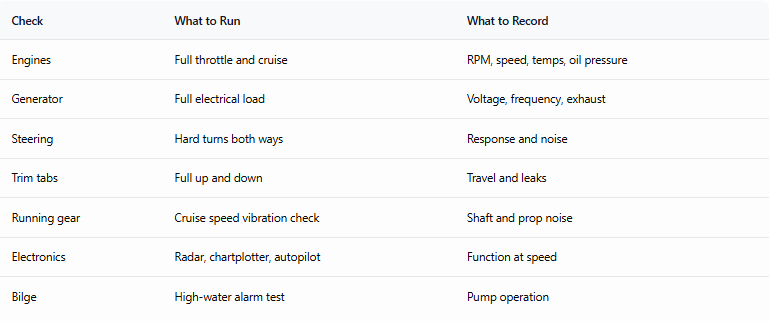
Bring a notebook. Note the sea state, load, and fuel level so the numbers mean something later.
Hidden costs on a used sportfish yacht rarely come from one big item. They come from a stack of small ones. Use this checklist before you sign.
Engine coolers and risers due for service
Generator hours high or service undocumented
Air conditioning and chiller age
Fuel tank condition and access
Bottom paint and blister repair
Running gear wear and prop condition
Electronics age and software support
Tower and hardtop corrosion
Safety gear expiration dates
Canvas, cushions, and enclosure wear
Trailer or lift condition, if included
Add up the likely repairs. Then decide whether the price still works. A Stuart, FL buyer looking for a used sportfish yacht near me should expect a haul-out and survey as part of any serious offer.
Negotiation starts with the survey report, not with the asking price. Use the findings as your use.
A practical approach:
Get the survey and engine report in writing.
List defects that affect safety or operation.
Ask for a repair credit or a price reduction.
Agree on who does the work and when.
Hold funds in escrow until items are signed off.
Protect yourself after closing with a written acceptance and a final walk-through. Confirm every agreed repair is complete and documented.
Key Takeaway The best protection is a survey you paid for and a report you understand. A broker who represents you, not the seller, will push for the findings to be addressed before closing.
Hidden mechanical costs on a used sportfish yacht are predictable. They show up in coolers, risers, generators, and records that were never kept.
The fix is a full marine survey, a separate engine survey, a real sea trial, and a careful read of the maintenance file. Do that work in Stuart, FL before closing, and the surprises shrink.
Spencer Christopher Yacht and Ship provides complete fiduciary care from first showing to delivery, backed by brokers who are USCG captains, former crew, and engineers. The Highest Standards. Both Sides. Fully Represented.
A proper used sportfish yacht survey covers the hull below and above the waterline, running gear, struts, rudders, shafts, and props, plus structural elements like stringers, bulkheads, and engine beds. It should also examine electrical systems, plumbing, fuel systems, through-hulls, and the generator. The surveyor produces a written report with photos and a list of deficiencies ranked by severity. Ask for a haul-out survey with moisture readings and a sea trial component. A survey that never leaves the dock misses the problems that only appear under load.
Yes. A general marine surveyor looks at the engine room, but a dedicated marine engine survey goes deeper: compression or cylinder performance, injector health, cooling system efficiency, exhaust condition, and oil analysis. Sportfish yachts run hard, and engine and gear repairs are among the largest hidden costs a buyer faces. An engine specialist can catch a tired engine, a failing aftercooler, or a gear issue that a hull-focused survey would only note in passing. The fee is small compared with a rebuild.
Ask for the full service history, not a summary. Look for regular oil and filter changes at the manufacturer's intervals, valve adjustments, aftercooler and heat exchanger service, and raw water pump replacements. Check whether the records are dated and tied to engine hours. Gaps of a year or more, or records that start only when the yacht was listed, are red flags. Cross-check the hours on the engine computers against the hour meters and the logbook. If records are missing, price the risk into your offer or walk away.
Run the yacht through its full operating range, not just a slow cruise. Record wide-open throttle RPM, speed, and boost, and confirm the engines reach the manufacturer's rated RPM. Watch for smoke, vibration, unusual noise, and temperature creep. Test the generator under load, the bow thruster, windlass, and all electronics. Cycle the gears and check for slipping or hard shifting. Note any alarms. A sea trial is where cooling, fuel delivery, and running gear problems surface, so bring the engine surveyor aboard.
BlogCompare boutique yacht brokerage service to national firms. See how captain-led representation, buyer and seller advocacy, and survey support differ.
 Blog
Learn how to finance a used sportfish yacht. Explore loan options, preapproval steps, documents needed, and what lenders evaluate.
 Blog
Yacht registration vs documentation explained: how USCG documentation and state registration differ, who qualifies, and what buyers must verify before
Send them over. Every inquiry gets a substantive response within 24 hours, from a person who has read what was asked.