 Blog
BlogHow to Evaluate Sportfish Engine Hours
Learn how to evaluate sportfish engine hours accurately. Understand duty cycles, maintenance history, and diagnostic tools to assess true engine condition.


Last Updated: September 13, 2026
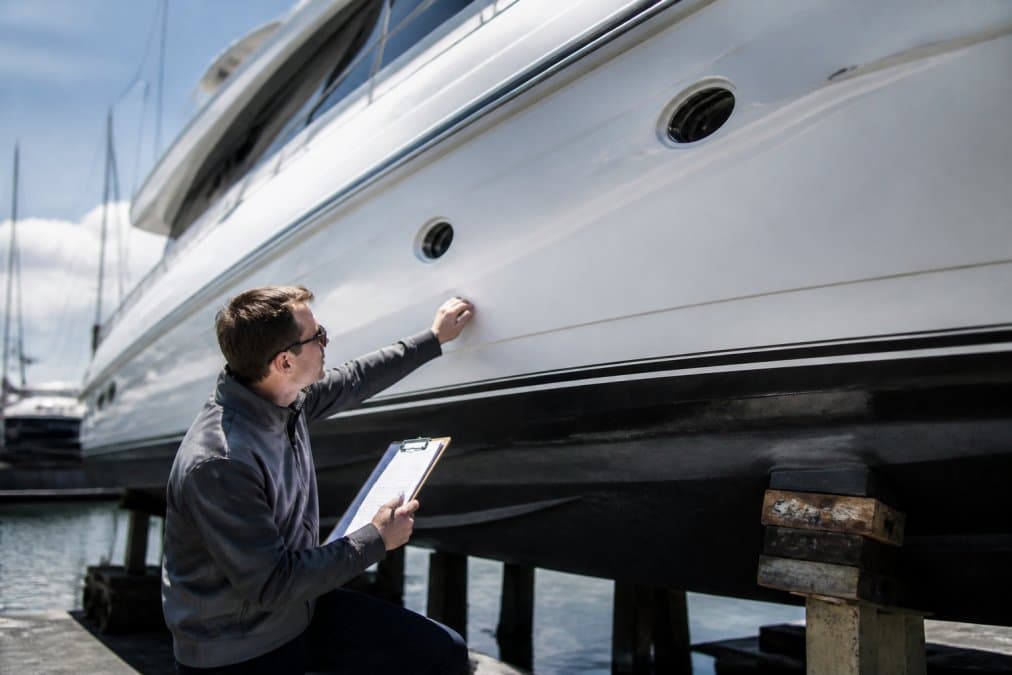
Hiring marine surveyor for yachts is the process of engaging an independent, credentialed professional to inspect a vessel's structure, systems, and documentation before you commit to a purchase or renewal. A surveyor's report is your only unbiased record of hull integrity, machinery condition, and safety compliance. Spencer Christopher Yacht and Ship, an independent brokerage on the Eastern Seaboard, treats the survey as the single most important checkpoint in any acquisition.
The reason is simple: sellers present vessels in their best light, and even honest owners miss problems that sit below the waterline. A surveyor works for you, not the seller, and their findings routinely change deal terms.
Below, we break down credentials, vetting questions, inspection scope, survey types, haul-out logistics, and the cost factors that drive pricing. We'll also flag the mistakes that cost buyers the most money.
Both credentials matter, and the strongest surveyors often hold one or the other. SAMS (Society of Accredited Marine Surveyors) and NAMS (National Association of Marine Surveyors) are the two recognized accrediting bodies for marine surveyors in the United States (marinesurvey.org). Each requires documented sea time, technical examination, and continuing education to maintain standing.
What separates them in practice is scope. SAMS accreditation is frequently held by surveyors working across recreational vessels, yachts, and small commercial craft. NAMS tends to draw surveyors with deeper commercial and engineering backgrounds. Neither credential is automatically superior; the fit depends on your vessel type.
Pro Tip Ask which specific standards the surveyor applies to your hull material. A surveyor who specializes in fiberglass sportfish boats may be the wrong person for an aluminum or steel superyacht, regardless of credential.
Vetting comes down to three things: verifiable credentials, relevant vessel experience, and a written scope of work. Request the surveyor's accreditation number, proof of insurance, and two or three recent reports on comparable vessels. A professional will share these without hesitation.
Both SAMS and NAMS publish member directories, so you can confirm a surveyor's standing directly rather than taking a business card at face value. Ask for the accreditation number and the year it was issued, then check the directory. A surveyor who has held accreditation for a decade on vessels in your size class is a different risk profile than one accredited last month.
Ask for a certificate of insurance showing professional liability (errors and omissions) coverage. This is what protects you if the surveyor misses a defect that later proves costly. A surveyor who cannot produce a certificate is not a surveyor you want climbing into your engine room. Confirm the policy is current and that the coverage limit is appropriate for your vessel's value.
A sample report tells you more than any phone call. Look for:
Photographs of every finding, not just the headline defects
Moisture meter readings with locations and values
A clear condition rating and a fair market valuation
A written scope that states what was and was not inspected
A sea trial section with performance observations
If the sample is a two-page summary with no measurements, expect the same for your vessel.
How many vessels of this size and hull material have you surveyed in the past year?
Will you perform a sea trial, and who operates the vessel during it?
What is included in the base fee, and what costs extra?
How long until I receive the full survey report?
Do you carry professional liability coverage, and can I see the certificate?
Will you attend the haul-out, or send an assistant?
Can you provide two references from owners of comparable vessels?
No accreditation number or reluctance to provide one
Reports that list findings without photographs or measurements
A surveyor recommended solely by the seller or listing broker
Verbal-only findings with no written condition and valuation
Pressure to skip the haul-out to save time
A quote that is dramatically below every other quote you received
Watch Out Accepting a seller-referred surveyor without independent verification is the most common mistake in yacht acquisition. It removes the one party whose entire job is to protect your interests.
Key Takeaway The vetting process is not a formality. A surveyor who passes the credential, insurance, and sample-report checks is the one whose findings you can actually use at the negotiating table.
A pre-purchase inspection covers the full vessel, not a sample of it. The surveyor examines hull integrity, deck and superstructure, through-hull fittings, steering, propulsion, electrical systems, fuel and plumbing, electronics, and safety equipment. Marine engineering components such as engines and generators receive separate attention.
The table below summarizes the typical scope and relative time each area takes.
.png)
These are not the same product, and confusing them wastes money. A pre-purchase inspection is buyer-focused and exhaustive: it exists to surface every defect before money changes hands, and it supports price negotiation. An insurance survey is narrower. It satisfies an underwriter's need to confirm condition and valuation before binding a policy.
An insurance survey typically covers structural condition, safety equipment, and a fair market valuation. It may not include a full sea trial or detailed machinery analysis unless the underwriter requests it. If you're buying, order the pre-purchase survey. If you already own the vessel and need coverage, the insurance survey is the right instrument.
A haul-out is mandatory for any serious pre-purchase inspection (boatus.com). The vessel is lifted from the water at a boatyard so the surveyor can examine the hull below the waterline, running gear, props, shafts, rudders, and through-hulls (westmarine.com). Marina access and yard scheduling determine when this happens.
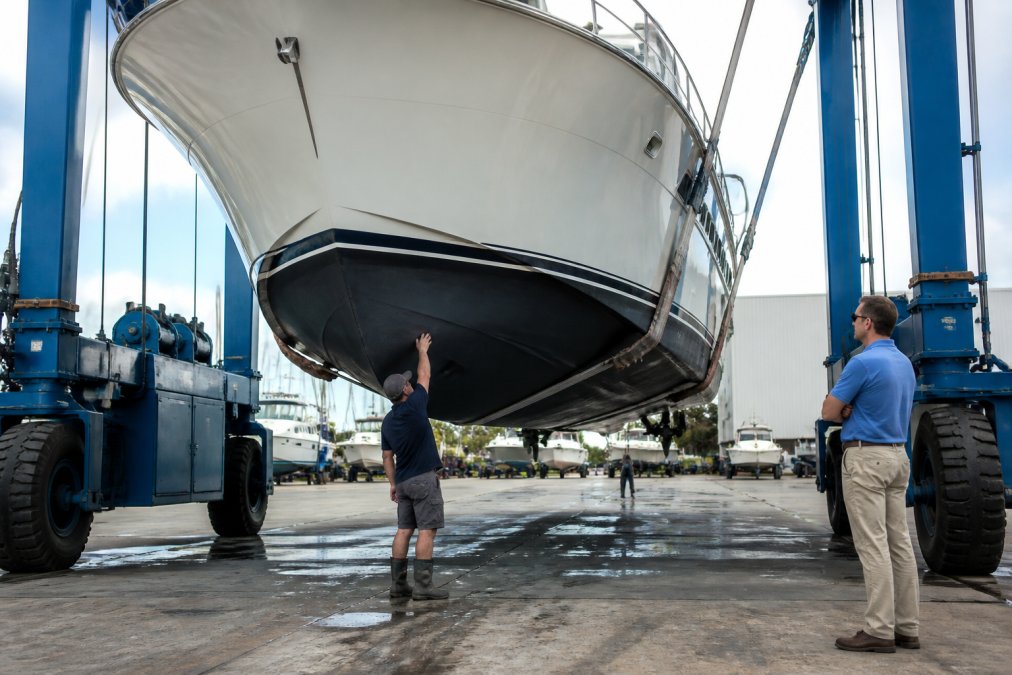
Timing matters. Yards book out weeks in advance during peak season, and a haul-out adds cost and coordination to the survey. Build it into your timeline rather than treating it as an afterthought. A surveyor who pressures you to skip the haul-out is protecting the schedule, not your investment.
There is no single price for a marine survey, and any calculator that promises one is guessing. Pricing depends on vessel length, hull material, age, systems complexity, location, and whether a haul-out and sea trial are included. A marine survey cost calculator is best used as a framework, not a quote.
Most surveyors quote using one of three structures, and knowing which one you are being offered tells you how to compare bids.
Per-foot pricing. The surveyor charges a rate per foot of vessel length, often with a minimum. This is common for straightforward fiberglass recreational vessels and makes bids easy to compare across surveyors.
Hourly pricing. The surveyor bills for time on site plus report writing. This is common for complex or older vessels where the scope is hard to predict, and it rewards you for a well-defined scope of work.
Flat-fee pricing. A single quoted number for a defined scope. This is the easiest to budget but the hardest to compare, because the scope behind the number varies widely between surveyors.
Ask which model the surveyor uses and what the scope includes before you compare two quotes. A per-foot quote and an hourly quote for the same vessel are not the same product.
A complete survey budget usually includes several separate charges:
Base survey fee, the inspection and written report
Haul-out and yard fees, charged by the boatyard, not the surveyor
Sea trial, sometimes included, sometimes a separate line
Travel, surveyors charge for distance to the vessel's location
Additional systems, generators, stabilizers, and advanced electronics add time
Oil and fluid analysis, lab fees for engine and transmission samples
Follow-up or re-inspection, if repairs require a second visit
Vessel length and type, larger and more complex yachts require more hours
Hull material, steel and aluminum demand specialized inspection
Age and condition, older vessels take longer to document
Systems scope, the more machinery, the more hours
Location and season, remote yards and peak-season scheduling raise costs
Request a written scope of work with every quote. The scope should state the vessel, the hull material, whether a haul-out and sea trial are included, what systems are covered, and the report turnaround time. Two quotes that look different on price often differ on scope. The cheaper quote may exclude the sea trial or the machinery analysis, which are exactly the items that surface the expensive problems.
For a precise figure on your vessel, request a quote directly rather than relying on generic estimates. A surveyor who will not put the scope in writing is not a surveyor you can hold to a budget.
Pro Tip Budget the haul-out and yard fees separately from the surveyor's fee. They are paid to the boatyard, not the surveyor, and they are the line item buyers most often forget.
The hardest part of hiring a marine surveyor for yachts isn't finding one. It's finding one who works for you, documents everything, and won't cut corners to keep a deal moving. That's the difference between a smooth closing and a surprise repair bill three months later.
At Spencer Christopher Yacht and Ship, our brokers are USCG captains, former crew, and engineers with over four decades of cumulative experience, and we provide complete fiduciary care from first showing to final delivery. Our in-house closing department keeps the transaction transparent, and we'll tell you plainly when a vessel is a bad deal.
Get started with Spencer Christopher Yacht and Ship and move into your next yacht with a team that protects your interests at every stage.
Survey pricing depends on vessel length, type, and scope. A pre-purchase survey on a 40-foot sportfish costs less than a full condition and valuation survey on a 100-foot superyacht. Travel, haul-out fees, and sea trial time add to the total. Because rates vary by region and surveyor, request a written quote that itemizes base fee, haul-out, and any lab work before you commit.
Yes. A survey report documents hull integrity, vessel systems, and deck operations before you close. It often reveals issues that change the negotiation or save you from a bad deal. Lenders and insurers usually require a survey anyway, so the cost is part of the transaction. Skipping it exposes you to surprise repairs after closing that can far exceed the survey fee.
Most marine insurers and lenders require a recent survey before they will bind coverage or fund a loan on a used vessel. The insurer wants a condition and valuation report to set the policy and premium. The lender wants proof the collateral is sound. Requirements vary by carrier and loan amount, so confirm the specific survey type and age of report each one accepts before you schedule.
A pre-purchase survey is buyer-focused and thorough: it covers hull integrity, vessel systems, deck operations, and a sea trial to inform your purchase decision. An insurance survey is narrower and satisfies the carrier's underwriting needs, often a condition and valuation report. If you are buying, order the pre-purchase survey. If you already own the yacht and your insurer requests an update, the insurance survey is the right scope.
BlogLearn how to evaluate sportfish engine hours accurately. Understand duty cycles, maintenance history, and diagnostic tools to assess true engine condition.
 Blog
BlogFollow the steps to buying a luxury yacht in 2026, from title search to survey, closing and delivery. Learn how a fiduciary broker protects your purchase.
 Blog
BlogLuxury yacht brokerage services Florida: compare top firms, learn what to look for in a yacht purchase agreement, and verify broker fiduciary.
Send them over. Every inquiry gets a substantive response within 24 hours, from a person who has read what was asked.