 Blog
BlogHow to Evaluate Sportfish Engine Hours
Learn how to evaluate sportfish engine hours accurately. Understand duty cycles, maintenance history, and diagnostic tools to assess true engine condition.


Last Updated: September 20, 2026
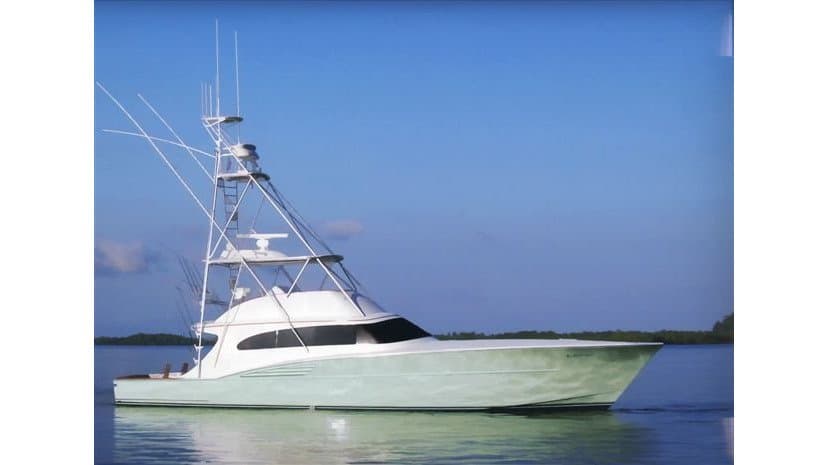
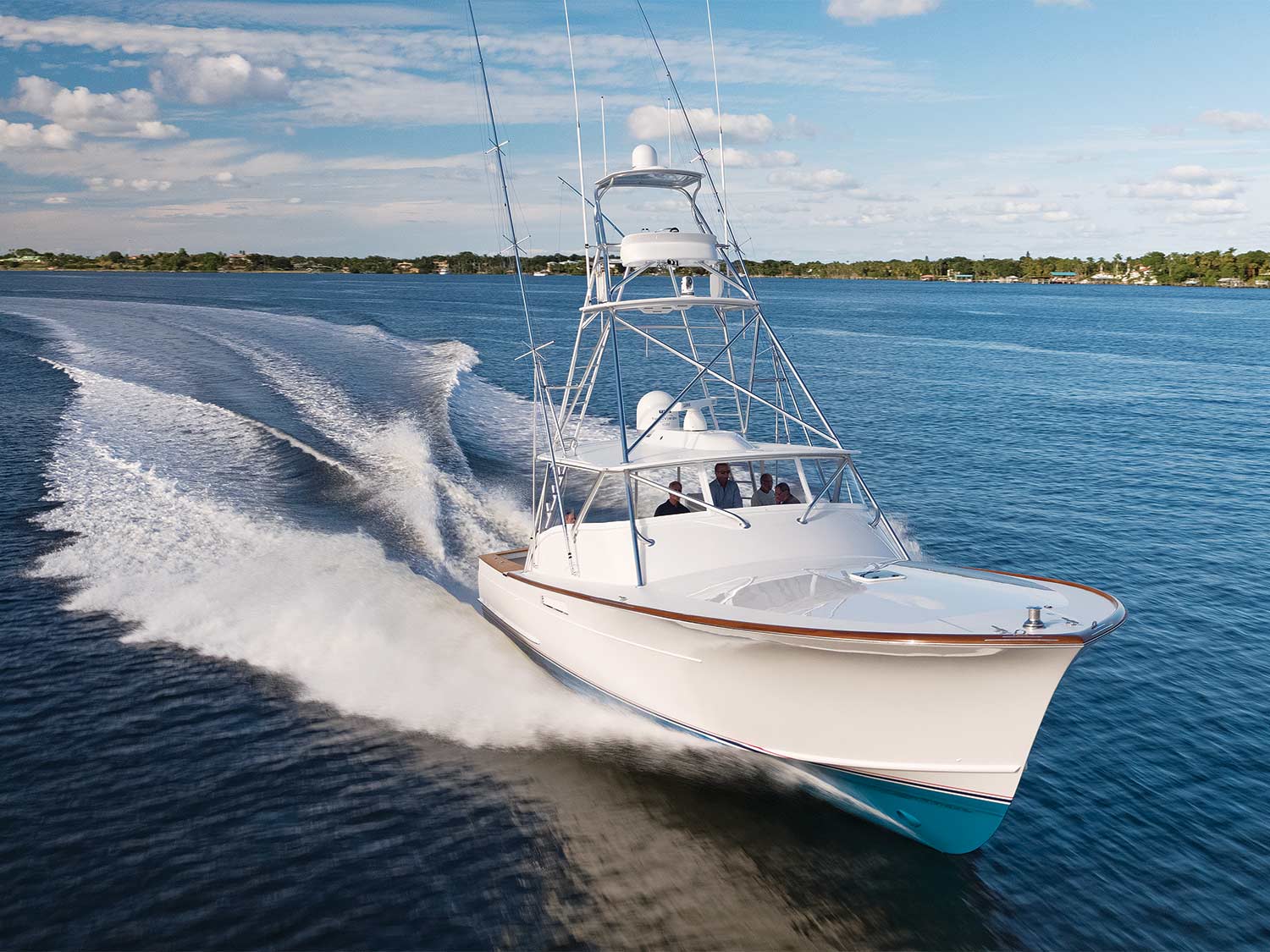
Sportfish yachts run harder than almost any other vessel on the water. A cruiser idles to a mooring and sits. A sportfish spends its life at 25 to 35 knots, trolling for hours, then running home in a following sea.
That duty cycle is the whole story. Common mechanical issues in sportfish yachts trace back to sustained high load: diesels held at cruise RPM for hours, turbochargers glowing, transmissions taking torque in both directions, and running gear hammering through chop at speed.
At Spencer Christopher Yacht and Ship, our brokers include USCG captains, former crew, and engineers, and the failures we see on survey are predictable. This guide covers the systems that fail most often, plus the maintenance schedule and survey checklist that catch them early.
Key Takeaway A sportfish problems are load-related, not age-related. A heavily used 2018 hull can be in worse mechanical shape than a lightly run 2005.
Diesel and fuel problems dominate the repair list on any high-hour sportfish. The engine itself is usually the victim, not the cause.
Water and microbial growth in diesel are the two most common culprits behind sputtering, hard starting, and injector damage. Common rail systems run at extreme pressures, and injector clearances are measured in microns. A trace of water or grit a mechanical engine would tolerate will destroy a common rail injector.
Multi-stage filtration with clear collection bowls lets you see water and debris before they reach the engine. Check the bowls at every fuel-up, drain water immediately, and replace elements on schedule rather than on symptoms.
Modern electronic engine controls are the biggest gap in most sportfish maintenance programs. Owners treat a fault code as an inconvenience and clear it.
That is a mistake. A logged code is a data point. Manufacturer diagnostic software pulls historical data, confirms whether a sensor is drifting, and shows whether an intermittent fault is real, finding the failing sensor before it strands you 40 miles offshore.
Overheating is almost never a failed engine. It is restricted raw water flow, usually upstream of the engine.
Work the chain in order:
Sea strainer: debris, eel grass, or a broken basket
Seacock: partially closed or seized
Impeller: missing vanes, which then lodge downstream
Heat exchanger: scaled tubes from years of saltwater
Aftercooler: clogged, robbing both power and cooling
A coolant flush on schedule and an annual raw water circuit inspection prevent most of these. Skipping them does not save money. It moves the cost to a head gasket or a turbocharger.
A sportfish gearbox lives a harder life than a cruiser transmission because of the duty cycle. Backing down on a fish means repeated hard shifts between forward and reverse under load. Trolling for six hours leaves the gearbox at low RPM with the oil pump turning slowly. Then the run home puts full engine torque through the reduction gear for an hour or more. No cruiser sees all three in the same day.
That combination produces three distinct failure patterns.
Clutch pack wear from shock loading. Every hard shift scuffs material off the clutch plates.
Work the shaft train in order at every haul-out:
Engine mounts: check for cracking, compression, and oil saturation
Flexible coupling: look for cracked rubber elements and missing fasteners
Shaft straightness: dial-indicate the shaft at the coupling and at the strut
Cutlass bearings: measure clearance against the manufacturer's wear limit, not by feel
Stuffing box: confirm drip rate matches the packing type, a dripless seal should run dry, traditional packing should not
Propeller: check pitch, blade condition, and hub integrity
Watch Out A worn engine mount lets the shaft misalign under load. Run it long enough and you will replace the shaft, the cutlass bearing, and possibly the gearbox rather than a mount.
One sportfish-specific point: the reduction gear ratio and propeller pitch have to match the way the vessel is actually run. A convertible propped for a top-end number it never sees will lug the engine at troll and overload the gearbox on the run home. If the vessel has been re-propped or re-powered, confirm the gearbox ratio and wheel are still a matched set.
Voltage drop is the quiet killer of marine electrical systems and the most misunderstood fault on a sportfisher. Every connection and every foot of cable has resistance, and resistance costs voltage. A circuit reading a healthy 12.6 volts at rest can fall below what a starter or electronic engine control needs the moment you load it.
Check these annually, and check them under load:
Battery cable terminals: cleaned to bright metal, sealed against moisture, and torqued to spec
Grounding and bonding connections: every one, throughout the vessel, not just the ones you can reach
Charging output: measured at the alternator and again at the battery, under load, to expose a voltage drop in the charge circuit
Battery condition: load-tested individually, not as a bank, one weak battery in a parallel bank will drag the others down
Bilge pump flow: tested with a bucket of water, not a switch flip
Pro Tip Photograph your zincs at every haul-out with the date visible. A three-year photo set tells you more about your bonding system than any single inspection.
A final note on electronic engine controls: they are sensitive to voltage in a way mechanical engines never were. A module that sees a momentary dip during starting can log a fault or fail to initialize. If you are chasing an intermittent code no technician can reproduce, check voltage at the module under load before replacing any sensor.
Saltwater is patient. Corrosion and electrolysis work on a long timeline, and by the time you see the damage, it has been progressing for years.
Zinc anodes are sacrificial by design. When they stop wasting away, that is the warning sign, not the good news, the bonding system is no longer protecting the underwater metals, and stray current is eating something more expensive instead.
Inspect running gear at every haul-out:
Propeller pitch and blade condition
Shaft straightness and cutlass bearings
Trim tabs and their rams
Through-hull fittings and seacock maintenance
A marine engine maintenance schedule fails for one reason: it is built around hours, and sportfish hours are not equal.
.png)
A pre-purchase survey is not a formality on a sportfish. It is the only chance to price deferred maintenance before you own it.
Require these:
Oil analysis on both engines and the generator
Compression or cylinder balance test
Electronic engine control fault code history download
Transmission fluid analysis
Shaft and cutlass bearing inspection, out of the water
Vibration analysis under load
Moisture meter survey of the hull and decks
Stringer and engine bed inspection
Bonding system continuity test
Sea trial at full load, not at idle
The recurring failure points are fuel contamination reaching the injectors, raw water cooling restrictions that cause overheating, exhaust and turbocharger corrosion, battery and cable voltage drop, and running gear damage from debris or groundings. On larger sportfish yachts, gearbox and shaft seal issues also surface under sustained load. Most of these trace back to deferred preventative maintenance rather than sudden part failure, which is why a documented service history and a mechanical sea trial matter more than engine hours alone.
Not by itself. Hours matter far less than how those hours were run and how the engine was serviced. A 500-hour marine diesel that spent its life trolling at low load, with clean fuel and on-schedule coolant and oil changes, is often in better shape than a 300-hour engine that ran hard with contaminated fuel. Ask for the marine engine maintenance schedule records, oil analysis results, and any diagnostic fault history before you treat hours as a proxy for condition.
A survey puts the vessel under load and inspection in ways a dock walk cannot. A qualified surveyor checks compression, coolant condition, exhaust temperature, shaft alignment, cutlass bearings, and corrosion at through-hulls and bonding points. Oil and coolant samples go to a lab. The findings go into a written report you can use in negotiation. Because Spencer Christopher Yacht and Ship brokers include USCG captains and former engineers, we read those reports the way a buyer should and flag what a seller may prefer to leave unmentioned.
A marine diesel rejects a large share of its heat through raw water, and that path is the first to foul. Sea strainers clog with grass and debris, impellers lose vanes, heat exchangers scale, and exhaust elbows corrode from the inside. Any of these raises operating temperature, and sustained overheating damages head gaskets, turbochargers, and injectors. Servicing strainers, impellers, and coolant on a fixed marine engine maintenance schedule is the cheapest insurance you can buy against a mid-passage shutdown.
BlogLearn how to evaluate sportfish engine hours accurately. Understand duty cycles, maintenance history, and diagnostic tools to assess true engine condition.
 Blog
BlogFollow the steps to buying a luxury yacht in 2026, from title search to survey, closing and delivery. Learn how a fiduciary broker protects your purchase.
 Blog
BlogLuxury yacht brokerage services Florida: compare top firms, learn what to look for in a yacht purchase agreement, and verify broker fiduciary.
Send them over. Every inquiry gets a substantive response within 24 hours, from a person who has read what was asked.